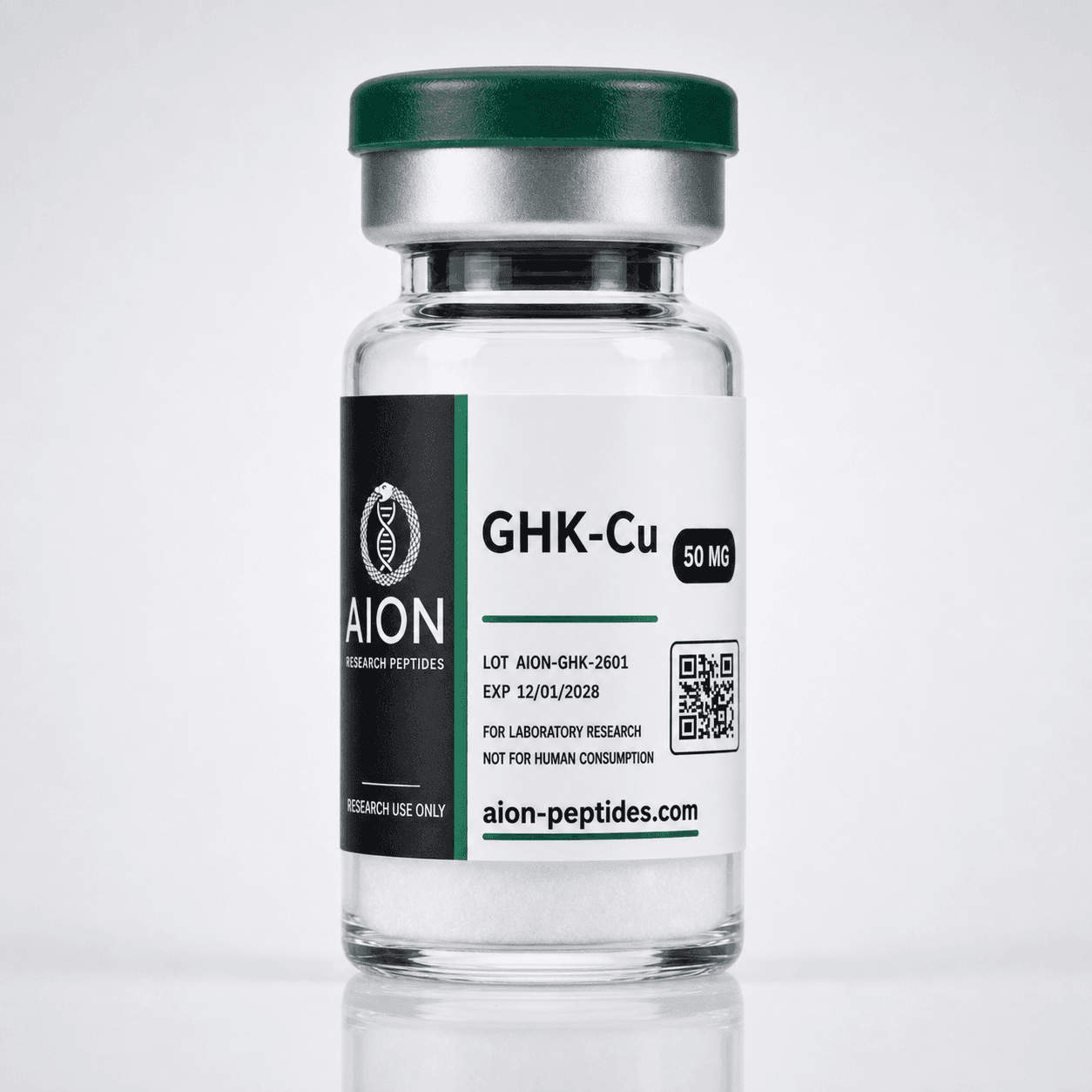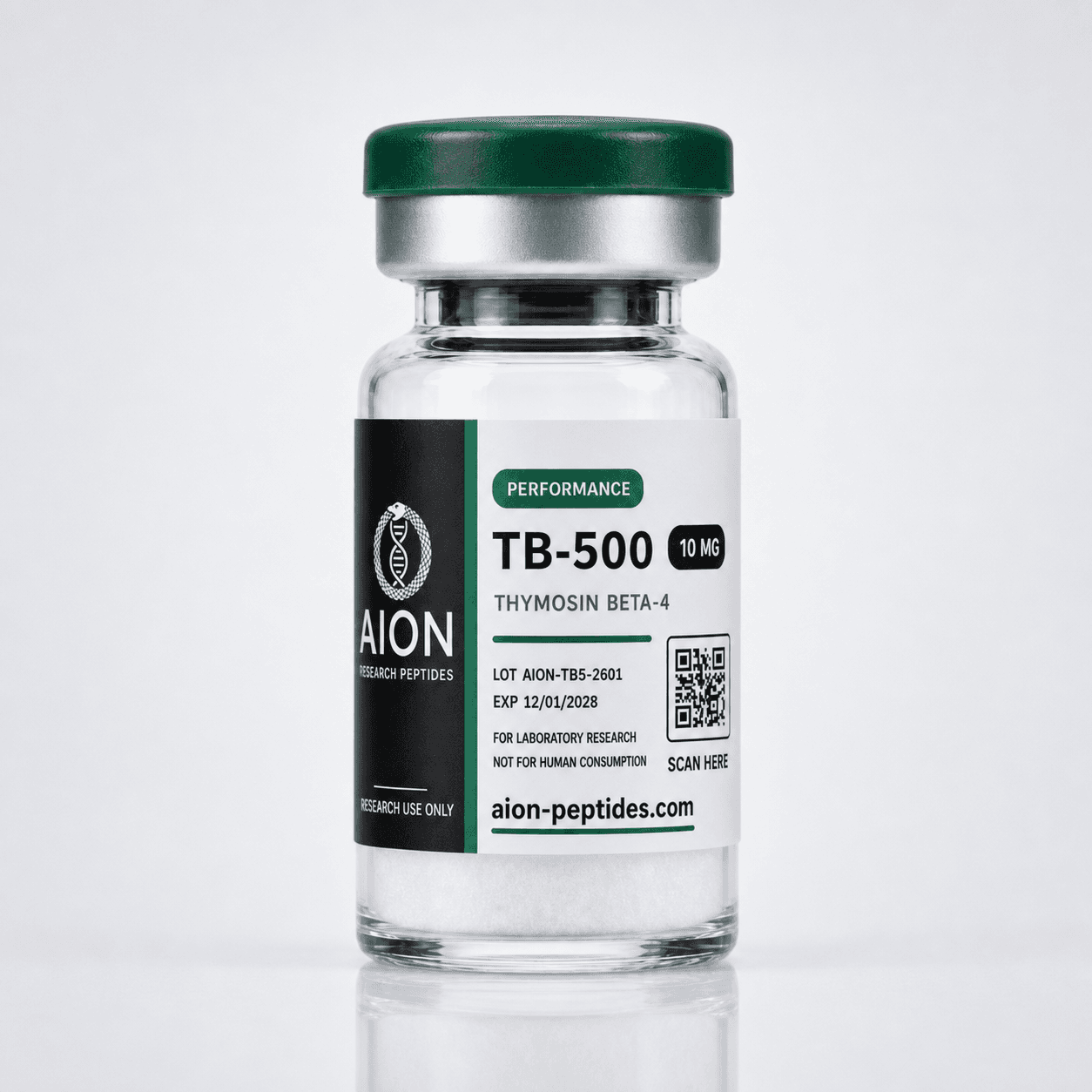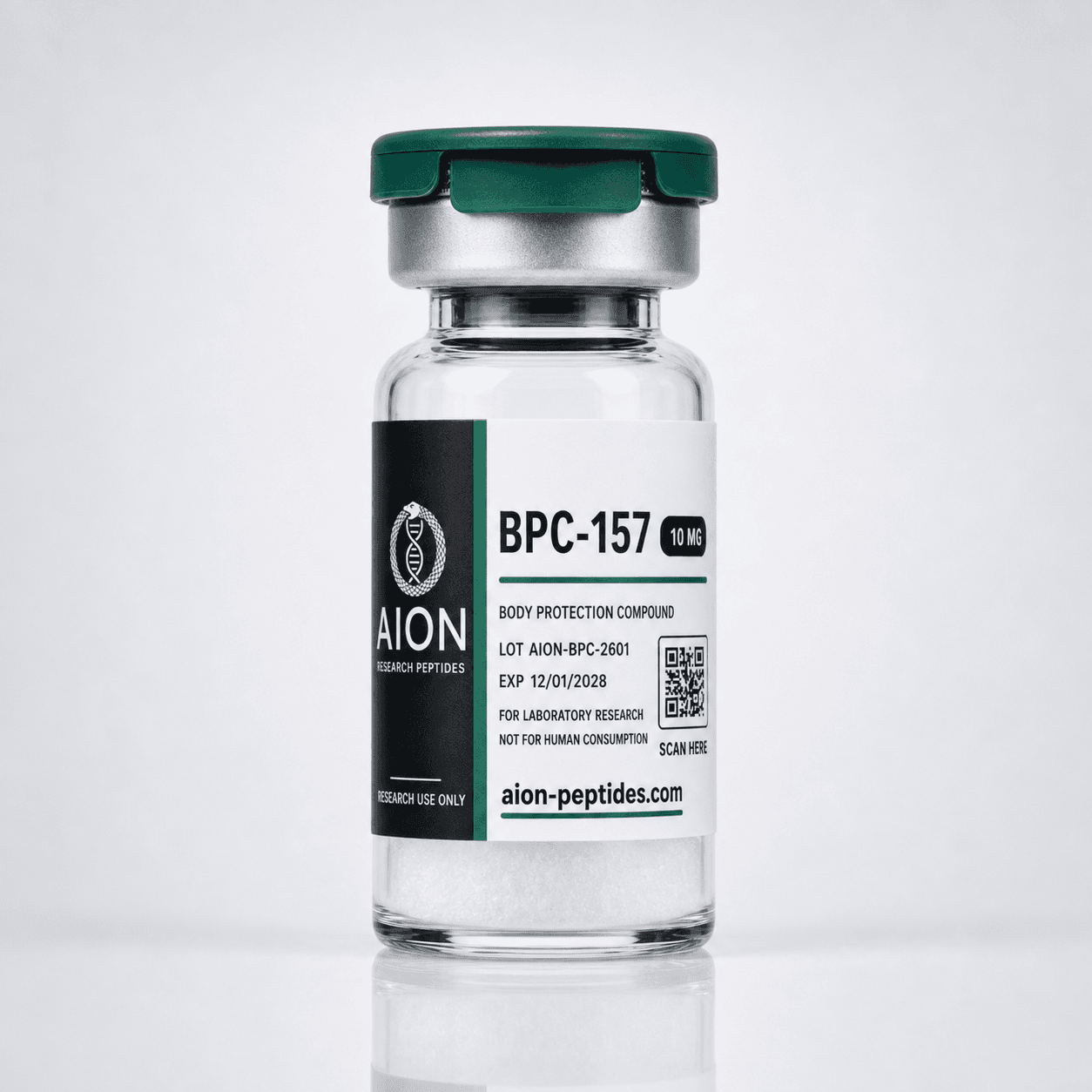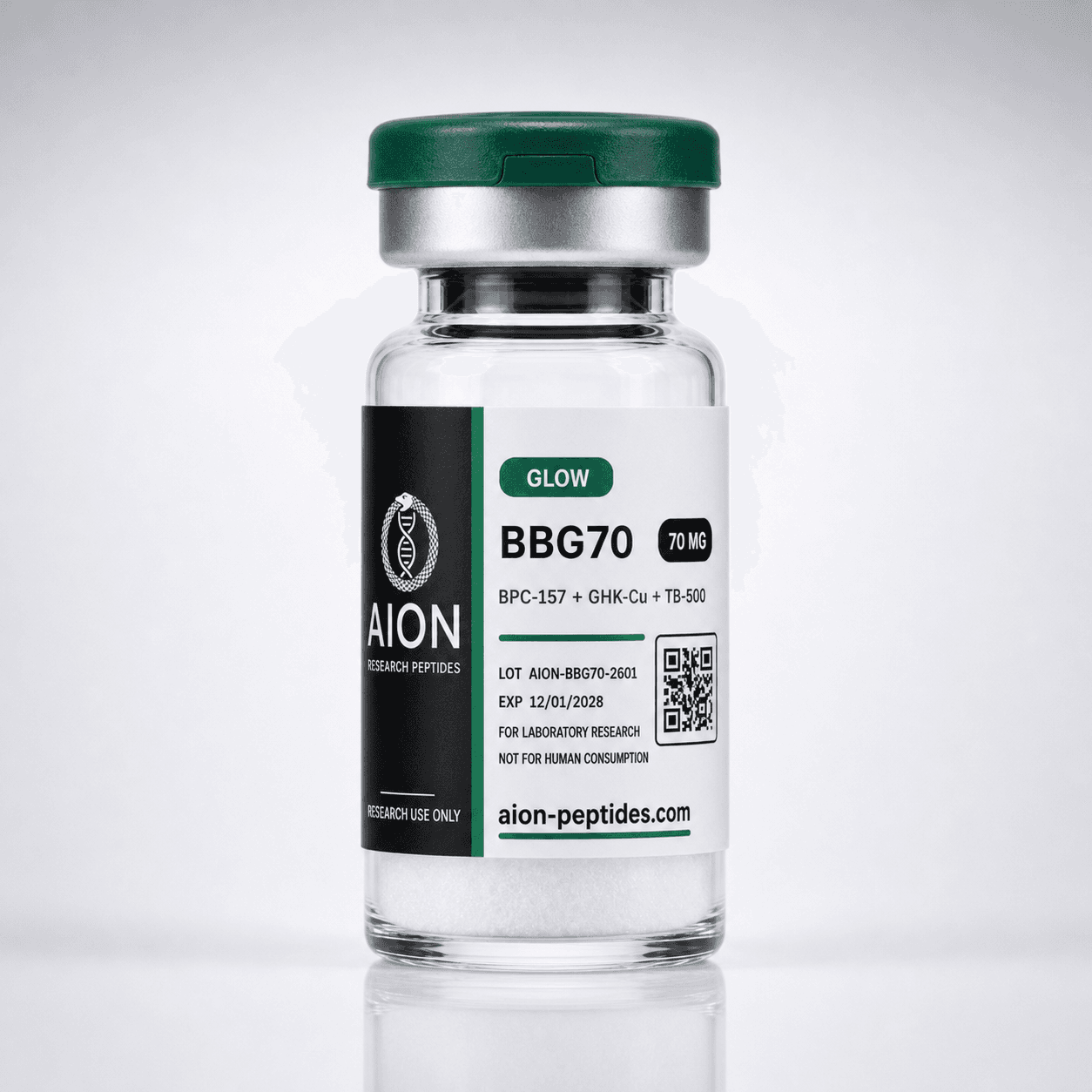
“GLOW” – BPC-157/TB-500/GHK-Cu - 70mg
GLOW combines three peptides frequently studied together in tissue-repair models — BPC-157, TB-500 and GHK-Cu — as a single 70mg preparation. The rationale for the combination is that each is associated with a different strand of that literature: angiogenesis, actin dynamics, and extracellular-matrix remodelling respectively. Supplied lyophilised. Independently assayed by a third-party laboratory, named on this page; the certificate of analysis for this lot, with its measured purity and batch number, is published on this page. For laboratory research use only.
$150.00
About GLOW Blend in research
GLOW is a 70 mg lyophilized research blend of three peptides, BPC-157, TB-500 and GHK-Cu, each of which has been studied separately in laboratory models. The published research described on this page concerns the individual compounds. We know of no published study of this combination, and nothing here should be read as evidence that the three act together or that the mixture behaves differently from its parts.
BPC-157 is a synthetic pentadecapeptide, a partial sequence of body protection compound, a protein isolated from human gastric juice. In explants and cultured fibroblasts from rat Achilles tendon, BPC-157 accelerated tendon outgrowth, increased cell survival under hydrogen peroxide stress and increased fibroblast migration, together with increased phosphorylation of FAK and paxillin; it did not directly change fibroblast proliferation (Chang et al., 2011). In a rat hind-limb ischemia model, a chick chorioallantoic membrane assay and human vascular endothelial cell cultures, BPC-157 was associated with increased vessel density, increased expression of VEGFR2 and activation of VEGFR2-Akt-eNOS signalling (Hsieh et al., 2017).
TB-500 is the name used for a synthetic peptide derived from thymosin β4, and the certificate lists this component as thymosin beta-4. The studies summarised here used thymosin β4 itself. Thymosin β4 was shown to be identical to Fx, the peptide bound to most of the unpolymerized actin in human platelets; it forms a 1:1 complex with actin monomers and inhibits their polymerization in vitro (Safer et al., 1991). In a rat full-thickness wound model, thymosin β4 increased re-epithelialization and wound contraction compared with saline controls, with increased collagen deposition and angiogenesis in the treated wounds, and it stimulated keratinocyte migration in a Boyden chamber assay (Malinda et al., 1999).
GHK-Cu is the copper(II) complex of the tripeptide glycyl-L-histidyl-L-lysine, which was first isolated from human plasma. In fibroblast cultures, GHK-Cu stimulated collagen synthesis beginning between 10⁻¹² and 10⁻¹¹ M and reaching a maximum at 10⁻⁹ M, independent of any change in cell number (Maquart et al., 1988). A narrative review by Pickart and Margolina (2018) summarises reports of GHK in tissue-repair models across several tissues, along with gene-expression data suggesting that it influences multiple biochemical pathways; it is a summary of that literature rather than new primary data.
The three components differ in size and chemistry, and the certificate for the current lot reports a different measured mass for each. Researchers comparing work on this blend with the single-compound literature cited here should account for those amounts, and for the fact that none of the cited studies tested the components together.
- BPC-157: proposed activation of the FAK-paxillin pathway in tendon fibroblasts, reported in rat tendon explants and cell culture.
- BPC-157: proposed pro-angiogenic action through VEGFR2 up-regulation and VEGFR2-Akt-eNOS signalling, reported in a rat hind-limb ischemia model and endothelial cell culture.
- Thymosin β4 (the parent peptide of TB-500): binds actin monomers 1:1 and inhibits actin polymerization, reported in vitro.
- Thymosin β4: increased re-epithelialization and keratinocyte migration, reported in a rat wound model and in a cell migration assay.
- GHK-Cu: stimulation of collagen synthesis, reported in fibroblast cultures.
- Chang CH, Tsai WC, Lin MS, et al. (2011). The promoting effect of pentadecapeptide BPC 157 on tendon healing involves tendon outgrowth, cell survival, and cell migration. J Appl Physiol (1985). [IN VITRO] PubMed record for reference 1, Chang 2011
- Hsieh MJ, Liu HT, Wang CN, et al. (2017). Therapeutic potential of pro-angiogenic BPC157 is associated with VEGFR2 activation and up-regulation. J Mol Med (Berl). [RODENT] PubMed record for reference 2, Hsieh 2017
- Safer D, Elzinga M, Nachmias VT (1991). Thymosin beta 4 and Fx, an actin-sequestering peptide, are indistinguishable. J Biol Chem. [IN VITRO] PubMed record for reference 3, Safer 1991
- Malinda KM, Sidhu GS, Mani H, et al. (1999). Thymosin beta4 accelerates wound healing. J Invest Dermatol. [RODENT] PubMed record for reference 4, Malinda 1999
- Maquart FX, Pickart L, Laurent M, et al. (1988). Stimulation of collagen synthesis in fibroblast cultures by the tripeptide-copper complex glycyl-L-histidyl-L-lysine-Cu2+. FEBS Lett. [IN VITRO] PubMed record for reference 5, Maquart 1988
- Pickart L, Margolina A (2018). Regenerative and Protective Actions of the GHK-Cu Peptide in the Light of the New Gene Data. Int J Mol Sci. [REVIEW] PubMed record for reference 6, Pickart 2018
Identity
- MOLECULAR FORMULA
- Composite blend of BPC-157, GHK-Cu, and TB-500
Composite blend of BPC-157, GHK-Cu and TB-500, per the certificate of analysis for lot ABL-BBG70-2604, which reports a measured unit mass of GHK-Cu 57.63 mg, BPC-157 10.65 mg and thymosin beta-4 9.73 mg; the product page gives a nominal 70 mg fill and no per-component split.
Storage and handling
- Store the lyophilized blend at -20 °C for long-term storage, sealed and protected from light, heat and moisture.
- Keep reconstituted solution at 2–8 °C and avoid repeated freeze–thaw. The stability of the three peptides together in solution has not been characterised, so prepare solutions close to the time of the experiment.
- Reconstitute in sterile water. All three components are water-soluble peptides; a blue tint in solution comes from the copper(II) complex of GHK-Cu.
- Adding 7 mL of sterile water to the 70 mg vial gives 10 mg/mL of total peptide, based on the nominal fill.
Lab testing
Certificate of Analysis
THIRD-PARTY VERIFIED
Purity
99.72%
Lot
ABL-BBG70-2604
Formula
Composite blend of BPC-157, GHK-Cu, and TB-500
Certificate date
Jun 18, 2026
Laboratory
Freedom Diagnostics
TESTS REPORTED Purity (HPLC-UV) · Identity by mass (LC-MS)
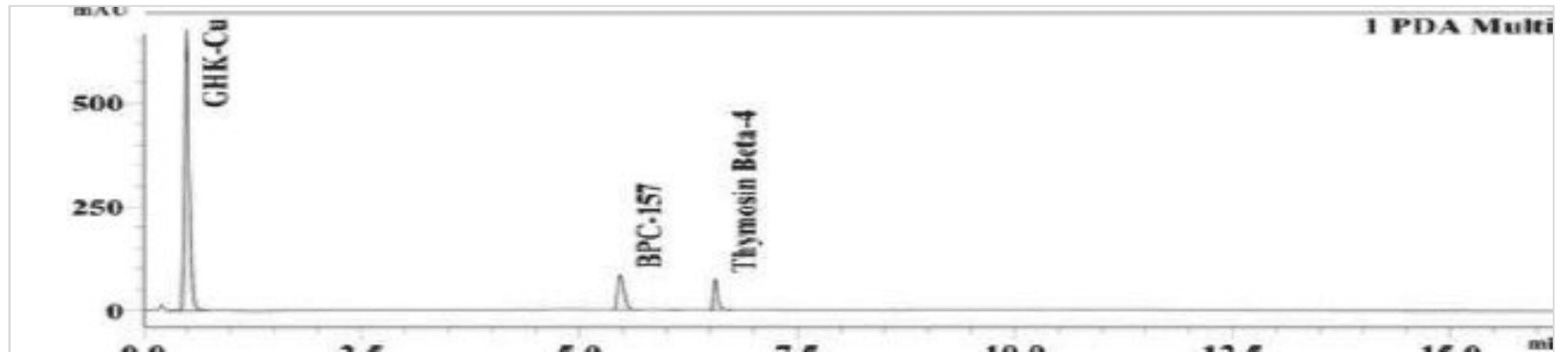
Lab report issued by Freedom Diagnostics for the sourced batch. For laboratory research use only.
Questions
What is in the GLOW blend?
Three peptides in one lyophilized 70 mg vial: BPC-157, TB-500 and GHK-Cu. The certificate for lot ABL-BBG70-2604 reports a measured unit mass of GHK-Cu 57.63 mg, BPC-157 10.65 mg and thymosin beta-4 9.73 mg. GLOW is a product name only.
Has the combination itself been studied?
Not to our knowledge. The published research cited on this page was done on each compound separately, in cell culture, rat and chick models. We know of no published study of BPC-157, TB-500 and GHK-Cu together, so no claim is made about how they behave in combination.
How does the certificate of analysis cover a blend?
The certificate for this lot, from Freedom Diagnostics, reports chromatographic purity by HPLC-UV (99.72%) and identity by mass (LC-MS), and lists a measured mass for each component. Because a mixture has no single molecular formula, its formula field reads "Composite blend of BPC-157, GHK-Cu, and TB-500" rather than a chemical formula.
How should the blend be stored?
Keep the lyophilized vial at -20 °C, sealed and away from light and heat. After reconstitution in sterile water, keep the solution at 2–8 °C, avoid repeated freeze–thaw, and prepare it close to the time of the experiment, since the stability of the mixed solution has not been characterised.
REVIEWED BY DEL POTTER, PHD · OCT 26, 2026
FOR LABORATORY RESEARCH USE ONLY · NOT FOR HUMAN OR ANIMAL USE · MUST BE 21+