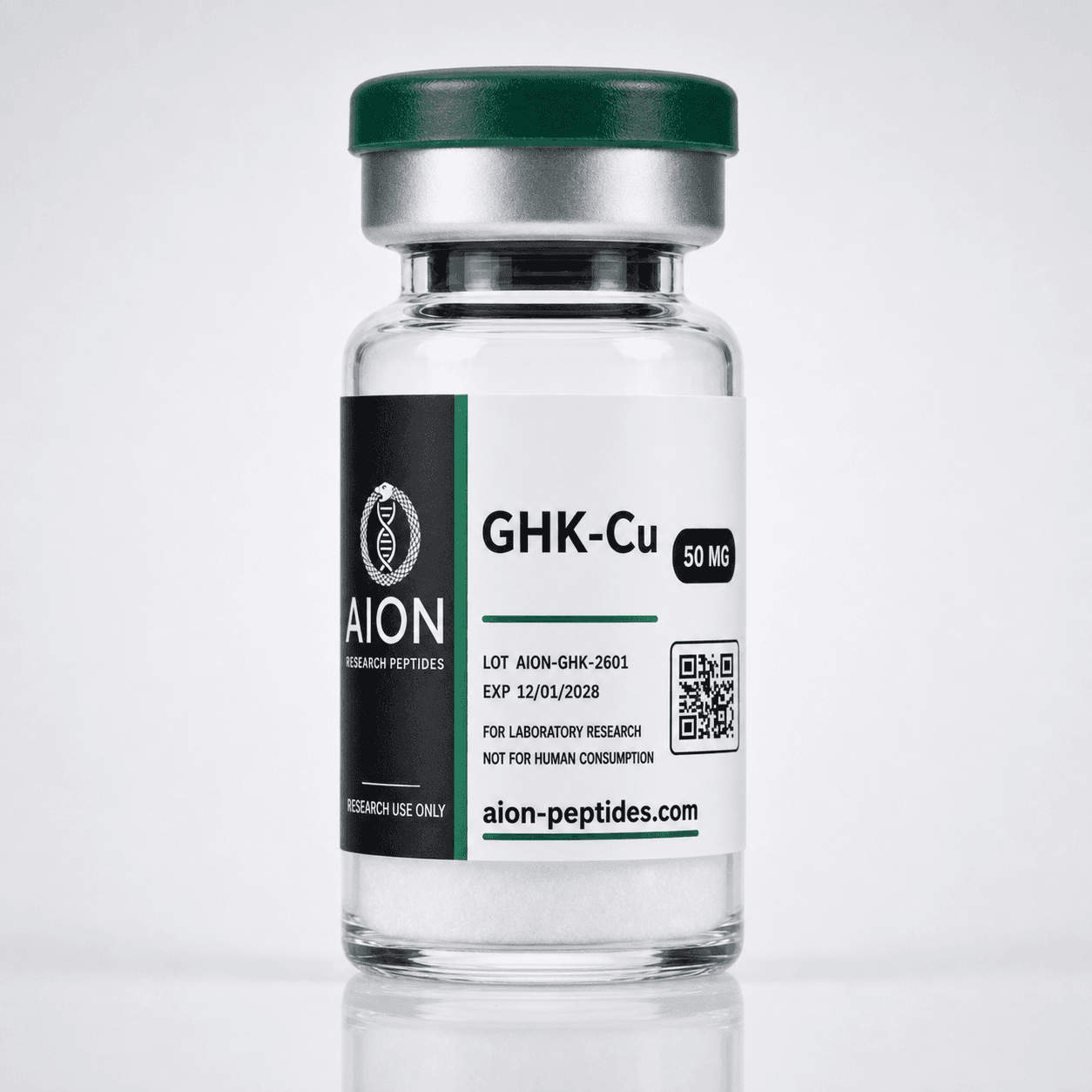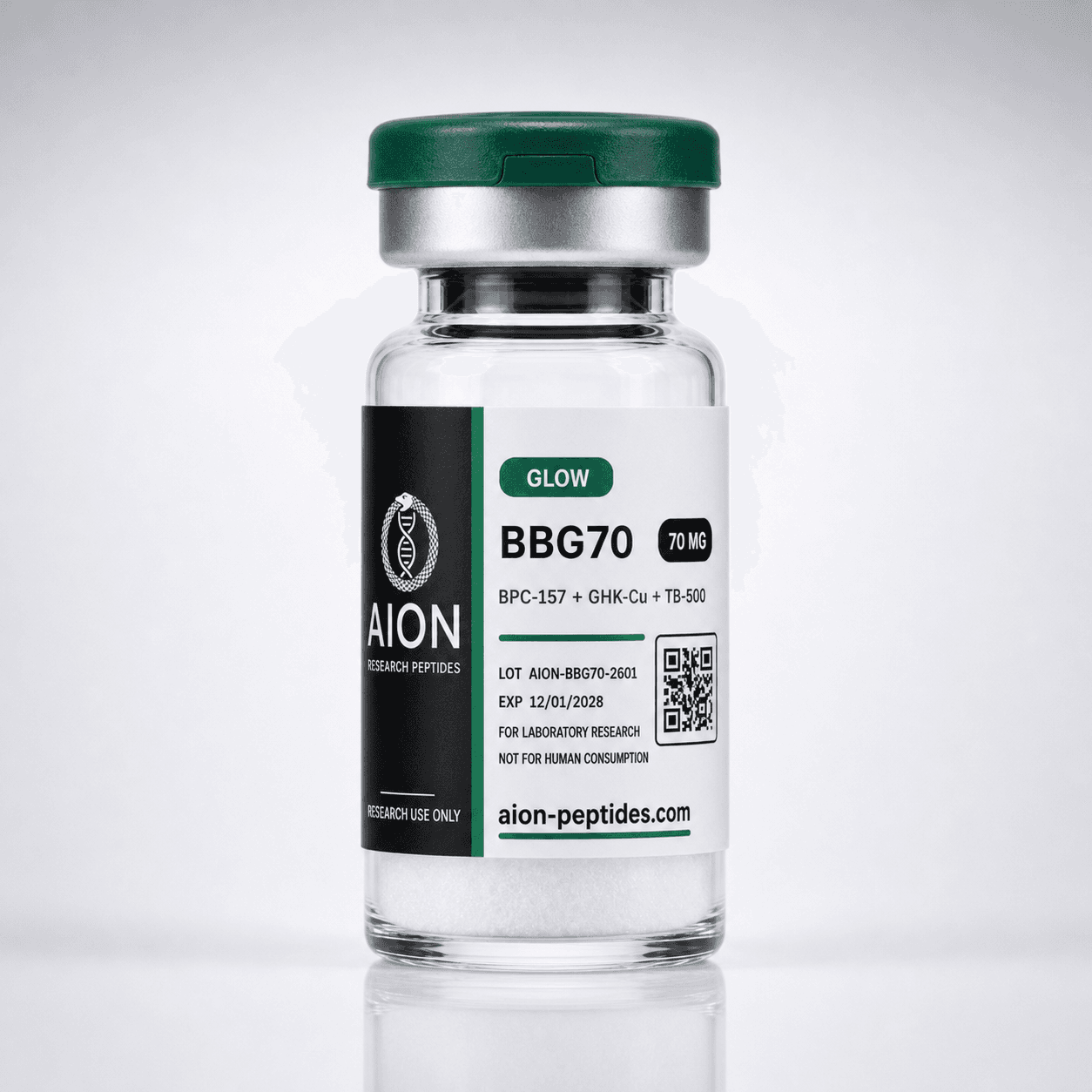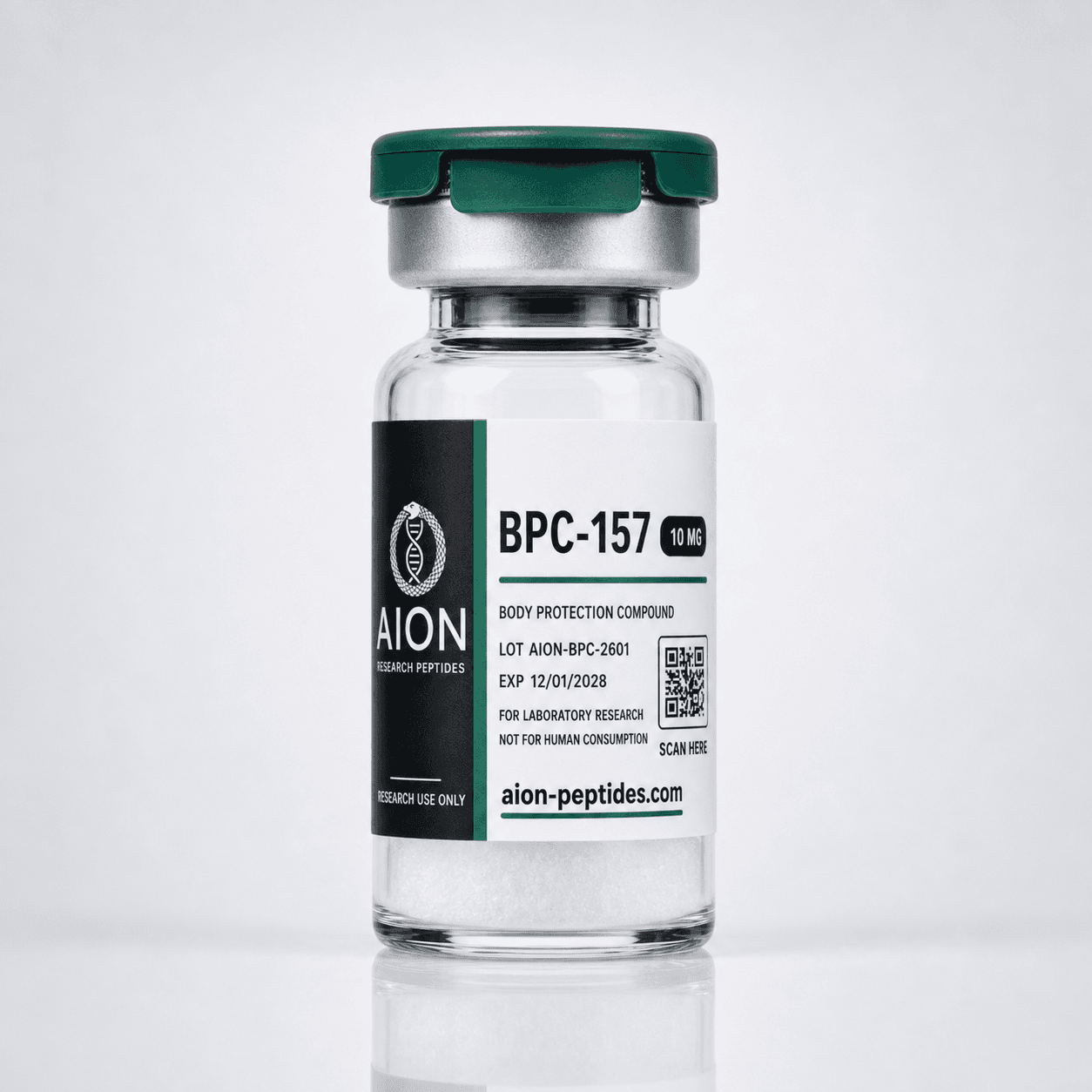
BPC-157 10mg
BPC-157 is a synthetic pentadecapeptide — fifteen amino acids — corresponding to a partial sequence of body protection compound, a protein isolated from human gastric juice. It is among the most widely cited peptides in preclinical tissue-repair literature, where it appears in studies of angiogenesis, fibroblast migration and connective-tissue models. Supplied lyophilised. Independently assayed by a third-party laboratory, named on this page; the certificate of analysis for this lot, with its measured purity and batch number, is published on this page. For laboratory research use only.
$65.00
About BPC-157 in research
BPC-157 is a synthetic 15-residue peptide derived from body protection compound, studied mainly in rodent tendon, gastric and vascular injury models. Its sequence, GEPPPGKPADDAGLV, corresponds to a partial sequence of body protection compound, a protein isolated from human gastric juice. A review from the University of Zagreb describes the peptide as stable in human gastric juice and discusses it in rodent models of gastric mucosal protection.
A large share of the published work concerns connective tissue. In rats with a surgically transected Achilles tendon, Staresinic and colleagues reported higher load to failure and Young's modulus, higher functional index scores, and more fibroblast, reticulin and collagen formation in BPC-157-treated animals than in controls over 14 days. In the same paper the peptide had no growth effect of its own on cultured tendocytes but opposed the growth-inhibiting effect of 4-hydroxynonenal. Cell studies from Chang Gung University then used tendon explants and fibroblasts from rat Achilles tendon: BPC-157 accelerated explant outgrowth, improved cell survival under hydrogen peroxide stress, and increased fibroblast migration and spreading, alongside increased phosphorylation of FAK and paxillin. A follow-up microarray study in the same cell type identified growth hormone receptor as one of the most strongly up-regulated genes, with JAK2 activation when growth hormone was added to treated cells.
A second strand of the literature concerns blood vessels. Hsieh and colleagues reported increased vessel density in the chick chorioallantoic membrane assay and in endothelial tube-formation assays, and faster recovery of blood flow, with more vessels, in a rat hind-limb ischaemia model. In cultured human vascular endothelial cells the peptide raised VEGFR2 expression but not VEGF-A, promoted VEGFR2 internalisation and activated VEGFR2-Akt-eNOS signalling; the endocytosis inhibitor dynasore blocked these effects. A review by Sikiric and co-authors gathers rodent studies relating BPC-157 to the nitric oxide system, including its interactions with L-NAME and L-arginine in models of alcohol-induced gastric lesions, blood pressure regulation and fistula healing.
The evidence base is preclinical. A 2019 critical review of tendon, ligament and skeletal muscle studies by Gwyer, Wragg and Wilson noted that most studies have been performed in small rodent models, that efficacy has not been confirmed in humans, and that only a handful of research groups have studied the peptide in depth. Both that review and the nitric oxide review describe the underlying mechanisms as not yet established, so the pathways listed below are proposals from individual models rather than a settled account.
- FAK-paxillin pathway activation, proposed to underlie the increased migration and spreading reported in cultured rat tendon fibroblasts.
- Up-regulation of growth hormone receptor, with downstream JAK2 activation, reported in rat tendon fibroblasts in vitro.
- Increased VEGFR2 expression and internalisation with VEGFR2-Akt-eNOS signalling, reported in human endothelial cells and a rat hind-limb ischaemia model.
- Interaction with the nitric oxide system, proposed in a review of rodent studies using L-NAME and L-arginine.
- Protection of cultured cells against oxidative stress, reported in hydrogen peroxide-stressed tendon fibroblasts and in tendocytes exposed to 4-hydroxynonenal.
- Staresinic M, Sebecic B, et al. (2003). Gastric pentadecapeptide BPC 157 accelerates healing of transected rat Achilles tendon and in vitro stimulates tendocytes growth. J Orthop Res. [RODENT] PubMed record for reference 1, Staresinic 2003
- Chang CH, Tsai WC, et al. (2011). The promoting effect of pentadecapeptide BPC 157 on tendon healing involves tendon outgrowth, cell survival, and cell migration. J Appl Physiol (1985). [IN VITRO] PubMed record for reference 2, Chang 2011
- Chang CH, Tsai WC, et al. (2014). Pentadecapeptide BPC 157 enhances the growth hormone receptor expression in tendon fibroblasts. Molecules. [IN VITRO] PubMed record for reference 3, Chang 2014
- Hsieh MJ, Liu HT, et al. (2017). Therapeutic potential of pro-angiogenic BPC157 is associated with VEGFR2 activation and up-regulation. J Mol Med (Berl). [RODENT] PubMed record for reference 4, Hsieh 2017
- Sikiric P, Seiwerth S, et al. (2014). Stable gastric pentadecapeptide BPC 157-NO-system relation. Curr Pharm Des. [REVIEW] PubMed record for reference 5, Sikiric 2014
- Gwyer D, Wragg NM, Wilson SL (2019). Gastric pentadecapeptide body protection compound BPC 157 and its role in accelerating musculoskeletal soft tissue healing. Cell Tissue Res. [REVIEW] PubMed record for reference 6, Gwyer 2019
Identity
- SEQUENCE
- GEPPPGKPADDAGLV (Gly-Glu-Pro-Pro-Pro-Gly-Lys-Pro-Ala-Asp-Asp-Ala-Gly-Leu-Val)
- MOLECULAR FORMULA
- C62H98N16O22
- MOLECULAR WEIGHT
- 1419.5 g/mol
- CAS NUMBER
- 137525-51-0
- PUBCHEM CID
- 9941957
Formula and weight from PubChem (CID 9941957); CAS from PubChem's ChemIDplus record; sequence from the PubChem structure and Staresinic et al. (2003); checked against the certificate of analysis, lot ABL-BPC-2602.
Storage and handling
- Keep the lyophilised powder sealed, dry and protected from light, typically at -20 °C for long-term storage. Allow the vial to reach room temperature before opening to limit moisture uptake.
- Once in solution, keep at 2–8 °C and use promptly. For longer storage, solutions are typically divided into aliquots and frozen at -20 °C or below, avoiding repeated freeze-thaw. Solution stability has not been established for this lot.
- Generally soluble in sterile water and common aqueous buffers. Add the solvent slowly down the side of the vial and swirl gently rather than shaking.
- Adding 2 mL of sterile water to a 10 mg vial gives a 5 mg/mL stock solution.
Lab testing
Certificate of Analysis
THIRD-PARTY VERIFIED
Purity
99.59%
Lot
ABL-BPC-2602
Formula
C62H98N16O22
Certificate date
Jun 18, 2026
Laboratory
Freedom Diagnostics
TESTS REPORTED Purity (HPLC-UV) · Identity by mass (LC-MS)
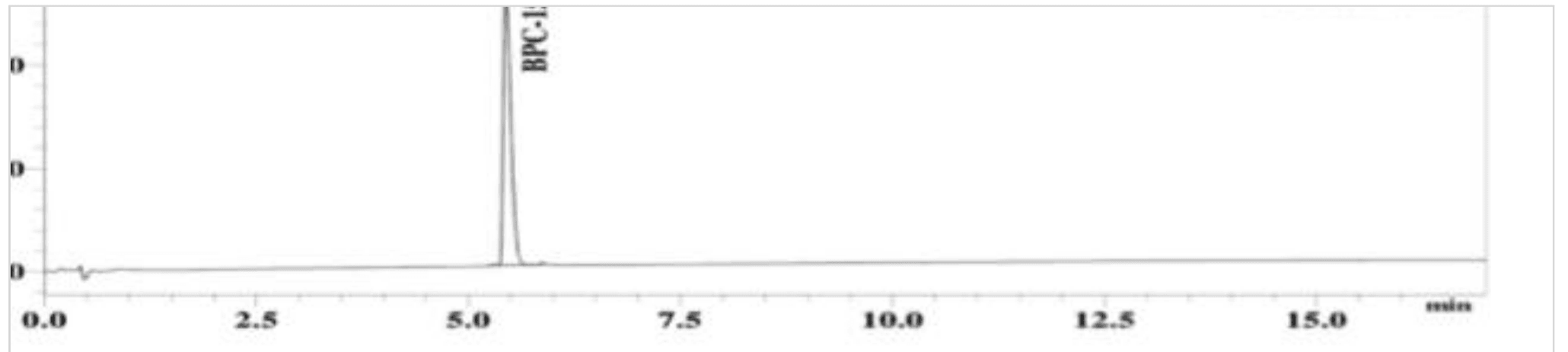
Lab report issued by Freedom Diagnostics for the sourced batch. For laboratory research use only.
Questions
What is the amino acid sequence of BPC-157?
GEPPPGKPADDAGLV: Gly-Glu-Pro-Pro-Pro-Gly-Lys-Pro-Ala-Asp-Asp-Ala-Gly-Leu-Val, fifteen residues. PubChem (CID 9941957) gives the formula C62H98N16O22 and a molecular weight of 1419.5 g/mol, and lists CAS 137525-51-0.
How does BPC-157 relate to body protection compound?
Body protection compound is a protein isolated from human gastric juice. BPC-157 is not the whole protein: it is a synthetic 15-residue peptide corresponding to a partial sequence of it, and it is the form used in the published tendon, vascular and gastric studies.
How should BPC-157 be stored in the lab?
As lyophilised powder, sealed, dry and away from light, typically at -20 °C for long-term storage. Once in solution, keep it at 2–8 °C and use it promptly, or freeze aliquots to avoid repeated freeze-thaw.
What does the certificate of analysis test?
The certificate for this lot, issued by Freedom Diagnostics, reports purity by HPLC-UV and identity by mass by LC-MS. The measured purity, lot number and chromatogram are shown in the certificate panel on this page.
In which research models has BPC-157 been studied?
Mostly in rodents: rat Achilles tendon transection, rat hind-limb ischaemia and rodent gastric and nitric oxide models. Cell work includes rat tendon explants and fibroblasts, human vascular endothelial cells and endothelial tube-formation assays, plus the chick chorioallantoic membrane assay. Reviews note that efficacy has not been confirmed in humans.
REVIEWED BY DEL POTTER, PHD · OCT 26, 2026
FOR LABORATORY RESEARCH USE ONLY · NOT FOR HUMAN OR ANIMAL USE · MUST BE 21+